

So no, you're not swapping a lawn full of weeds for a lawn full of weeds. But "never see a weed again" isn't quite true either, and I'd rather tell you that now than have you find out in your first autumn. Below I'll explain where weeds actually come from, why our grass doesn't need a weed membrane on most jobs, and the small habits that keep your artificial grass clear. If you've got a specific garden in mind, book a free site survey and we'll look at the ground with you.
The short answer
- •Through the backing from below: rare when the ground has been properly prepared.
- •At edges and joins: possible if the perimeter isn't secure or there's a gap next to a wall, path or planting bed.
- •On top of the grass: the most common one. Seeds blow in, settle in dust and organic debris in the pile, and sprout. They don't have proper roots and lift out easily.
- •A weed membrane isn't something our grass requires. It's only needed in certain situations, so we add a weed membrane only where the job needs one.
Where weeds on artificial grass actually come from
From underneath
Artificial grass has a permeable backing so rainwater can drain through, which means there are small drainage holes. In theory a determined weed can push up through one. In practice, on a well-prepared site, it doesn't happen often. That's because the work underneath does most of the job: as best we can, we prepare the ground and clear the existing vegetation and roots, remove unsuitable material, then lay and compact the right base. Weeds struggle to establish through a firm, compacted base with artificial grass on top.
Grass laid straight onto old soil, or onto a thin layer of sand over an old lawn, is asking for trouble. It's the same story as uneven patches and puddles: the problems we're called out to look at usually come from what's underneath, not the grass itself. Our ground preparation guide goes into that in more detail.
Around the edges and joins
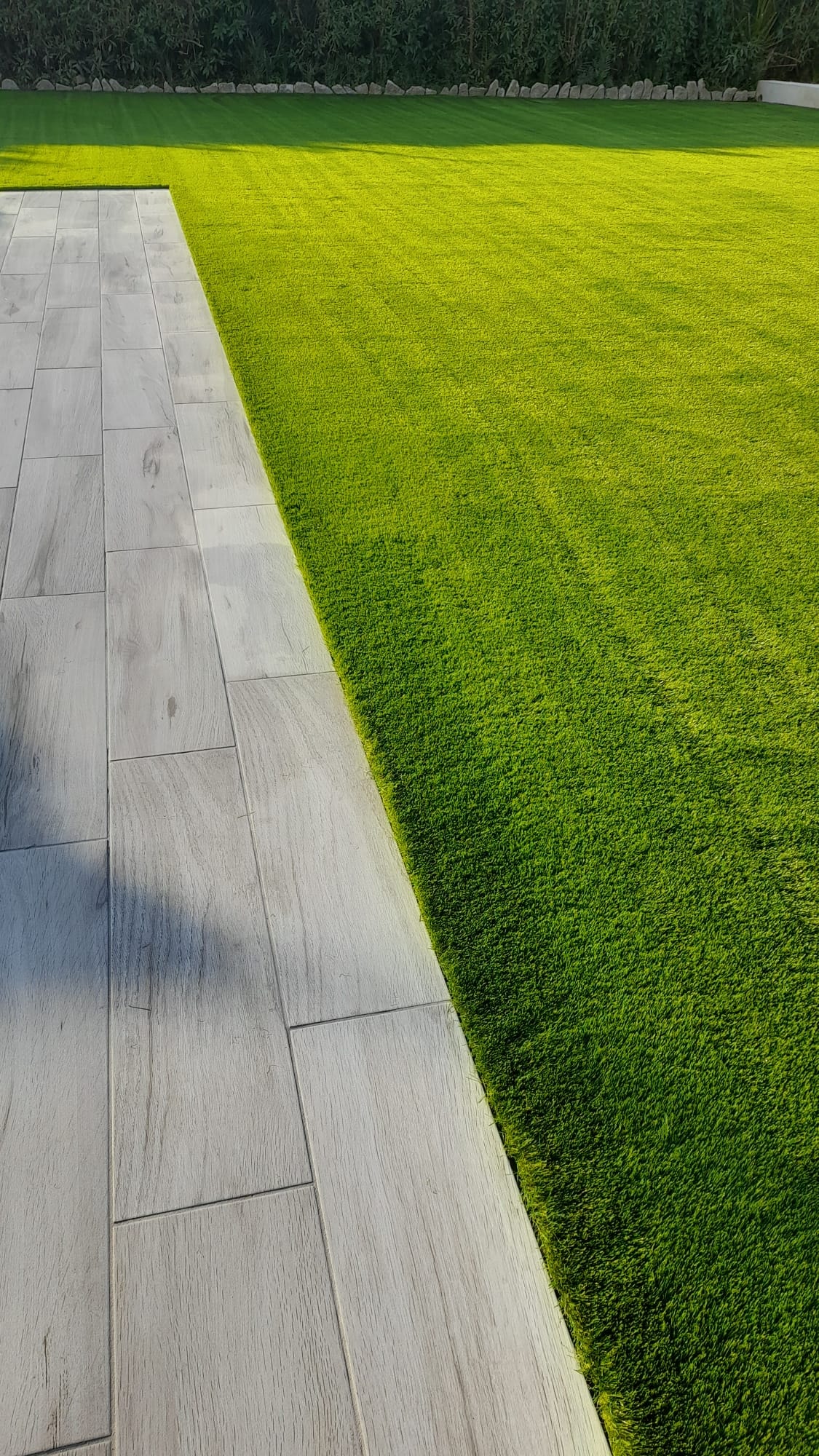
Edges are where a garden meets the rest of the world: walls, paths, gravel borders, planting beds. If the perimeter isn't secured properly, or there's a gap where the grass meets a wall or kerb, weeds from the neighbouring soil will happily creep in. The same goes for a join. That's why we put real care into edging and joins. A clean, secure edge looks better and gives weeds far fewer places to start.
On top of the grass
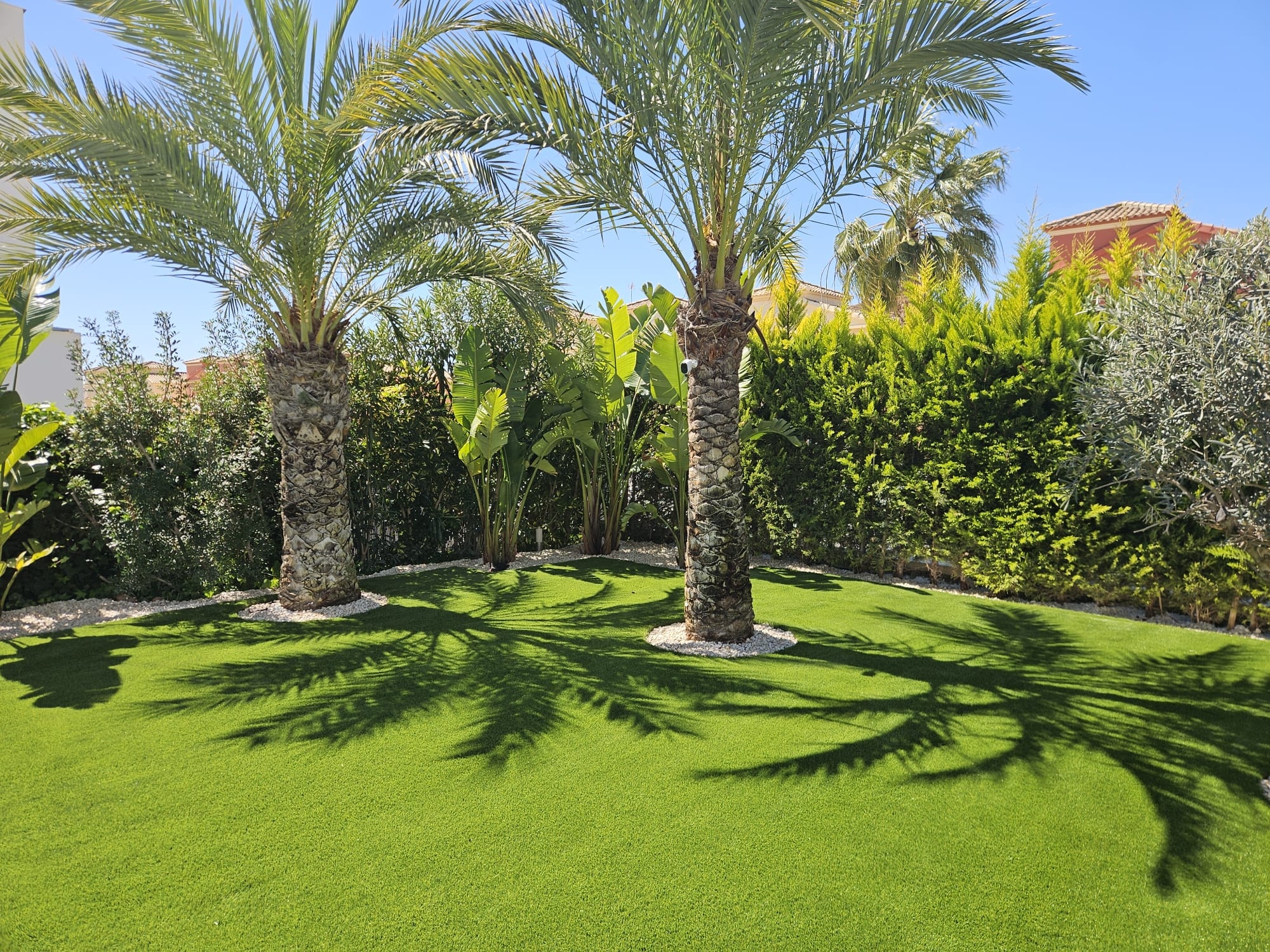
This is the one most owners see, and it has nothing to do with the installation. Wind, birds and nearby planting drop seeds onto the lawn. If dust, leaves, pine needles or soil are left to build up in the pile, those seeds have something to germinate in. They tend to show up after the first decent autumn rain, when everything outdoors has a growth spurt after the dry summer.
The good news: these weeds are growing in a thin layer of debris, not in the ground. They lift out with your fingers.
Do you need a weed membrane under artificial grass?
Usually not. A weed membrane is a fabric layer that can go into the preparation to help stop weeds coming up from the ground below. Our grass generally doesn't require one, and to be honest we don't like to use membrane unless we have to. It's only needed in certain situations, and we decide that at the survey. If your job needs one, we'll fit it.
So it isn't a standard layer on our installations. We add a weed membrane only where the job needs one.
Here's the bit of myth-busting: a membrane on top of poor preparation won't save the installation. If the base is wrong, you'll have movement, dips and drainage problems whatever fabric is underneath. Getting the preparation right is where the effort should go, and that's what we look at on every survey.
How to keep your artificial grass weed-free
None of this is a chore. It's the same light care that keeps the lawn looking good anyway.
- 1.Clear debris regularly. Leaves, pine needles and dust are what seeds grow in. A stiff brush, a leaf blower or a plastic rake does the job. Avoid metal rakes, which can damage the fibres. More in how to clean artificial grass.
- 2.Pull the odd weed out by hand. Grip it near the base and lift. Do it while it's small and it comes out roots and all. Wear gloves and wash your hands after as some weeds and plants here can be poisonous.
- 3.A standard weedkiller is fine. Most weedkillers are fine to use on artificial grass, and a standard one is all you'd need. Its always best to check first before using, maybe on a small patch test on a spare bit of the same grass you might have.
- 4.Keep the edges tidy. Trim back planting and gravel beds that spill onto the lawn, and keep soil and mulch off the grass.
- 5.Do a quick check before you leave. If it's a holiday home, clear the debris before you lock up for the season. Our guide to preparing artificial grass for winter has a simple checklist.
What about a weed that keeps coming back?
One weed on top of the grass after a rainy week is nothing to worry about. If one keeps coming back in the same place on an edge or along a join, there's no need to call us out: just treat it with a standard weedkiller.
Lumps, puddles or edges lifting are a different matter. Plenty of these problems can be put right with a repair rather than a full replacement, including on lawns we didn't install. If you're seeing those, have a read of what to do if artificial grass has been poorly installed and my artificial grass has come loose. Plenty of these problems can be put right with a repair rather than a full replacement, including on lawns we didn't install.